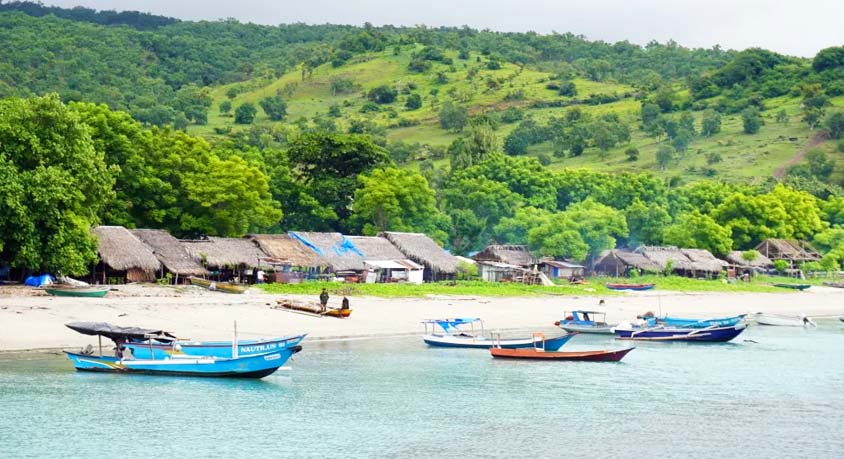
A sea eagle dropped a fish ten meters from my kayak. The splash scared a turtle that was sleeping on the surface. The turtle bolted. I laughed. My friend Sam stopped paddling and said, “Where the hell are we?” Atauro Island. A thirty-kilometer strip of volcanic rock between Timor-Leste and Indonesia. No chain hotels. No Instagram vans. Just fishermen, goats, and water so blue it hurt my eyes.
We almost went to Bali again. Then a UN worker in Dili said, “Atauro. Cheaper. Better diving. No one goes.” The public ferry from Dili to Atauro cost $5 each and took two and a half hours. We sat on plastic chairs next to a family carrying a live pig. The pig squealed. Sam covered his ears. The ferry dropped us at the main village, Beloi. No jetty. Just shallow water. We waded to shore with our bags over our heads.
Our homestay was run by a local family in the village of Adara. A bamboo hut with a palm leaf roof. Two mattresses, a mosquito net with one hole, and a squat toilet out back. $10 per night total. Five dollars each. The mother, Senhora Rosa, brought us fresh papaya and black coffee every morning. “No sugar,” she said. Sam asked. She gave him half a spoon. “Sweet now.” Sam smiled.
Snorkeling off the beach in Adara was free and unreal. We borrowed masks from the homestay for $1 each per day. Walked into the water at 8 AM. Within twenty meters, we found a coral garden with more fish than I've seen in Thailand. A cuttlefish changed color from brown to white to purple right in front of us. Sam tapped my shoulder. A reef shark, maybe a meter long, swam below. We followed it for five minutes until it disappeared into a crevice.
Most tourists miss the hike to the old Portuguese fort. From Beloi, follow the dirt road past the school, then take the goat trail up the hill. No signs. We climbed for forty minutes, sweating, stepping over rocks and dry grass. At the top, a crumbling stone wall and two rusty cannons. The view: the entire island chain, the ocean, and a fisherman’s boat far below. No entry fee. No gift shop. A lizard watched us from a cannon.
The real hidden spot is the Blue Lagoon on the east coast. We rented a local boat for $20 total – four of us split with two Swiss travelers. The boat took twenty minutes. The lagoon is a collapsed cave pool connected to the ocean by a small tunnel. You swim through the tunnel at low tide. Inside, the water glows electric blue. We floated in silence. The Swiss woman whispered, “This is not real.” It was real.
We tried diving. Atauro has some of the highest reef fish diversity on Earth. A dive shop in Beloi charged $35 for a single dive including gear and a local guide. Our guide, a man named Augusto who grew up on the island, pointed at a pygmy seahorse the size of my fingernail. “This one I find yesterday. You first tourist to see.” Sam almost cried underwater. Bubbles everywhere. We also saw a school of bumphead parrotfish and a napoleon wrasse.
Food on Atauro is basic and dirt cheap. A plate of grilled tuna with rice and beans – $1.50. Sam asked for vegetables. Senhora Rosa brought boiled cassava leaves. “Eat. Strong.” Sam ate. She also made ikan pepes – fish wrapped in banana leaves with chili and tomato – $1.80 for a generous portion. We drank fresh coconut water from a boy who climbed a tree for us. $0.30 each. The boy was nine years old. He spoke three languages.
One afternoon, we walked to the village of Makadade on the north coast. The walk took two hours along a dirt path. We passed women weaving tais (traditional cloths) under a tree. One woman offered to sell us a small piece for $3. Sam bought two. “Christmas presents,” he said. We also passed a field where kids were playing football with a ball made of plastic bags. They invited us to join. I scored an own goal. They laughed so hard one kid fell over.
Season warning: We went in early November – early rainy season. The sea was calm but the air was thick and hot. It rained for one hour every afternoon, exactly at 3 PM. Like clockwork. We sat on our bamboo porch and watched the water pour off the palm leaves. Bring a dry bag for your phone. Also, the public ferry from Dili to Atauro runs only three times a week. We almost missed the return boat because the schedule changed without notice. Ask three different people for the departure time. Then ask a fourth.
On our last morning, we woke up at 5 AM to watch the sunrise from the east beach. No one else was there. The sky turned pink, then orange, then gold. A local fisherman pulled his boat onto the sand. “Good morning,” he said. He handed us a freshly caught tuna. “Breakfast.” We tried to pay. He shook his head. “You guest.” We grilled the tuna over a fire at the homestay. Senhora Rosa taught us how. She laughed at our clumsy flipping. The tuna tasted like salt and smoke and a morning we will never forget.
Three days on Atauro. Total per person including ferry from Dili, homestay, food, boat to Blue Lagoon, one dive, and masks: $73. That's $24 a day. Sam checked his phone. “My coffee budget in Melbourne is higher than this.” The pig on the ferry squealed the whole way back. I didn't mind. Bali can keep its beach clubs. Atauro gave me a pygmy seahorse, a plastic-bag football game, and a tuna that cost nothing but gratitude.