The afternoon sun was already dipping towards the horizon, painting the narrow alley in shades of gold and orange, but the air still hung heavy with the scent of spices and roasting nuts. We weren’t on Armenian Street, dodging selfie sticks. Instead, I was perched on a wobbly plastic stool outside a nameless shophouse in a forgotten corner of George Town, nursing a robust kopi-o while watching an elderly man meticulously repair a vintage sewing machine. My friends, Sarah and Mark, were deep in conversation with a woman weaving intricate beaded slippers inside. This, I thought, sipping my cheap, perfect coffee, was the real Penang, a world away from the glossy brochures and inflated prices.
Let’s be honest, Penang has become the poster child for Southeast Asian charm, which, inevitably, means tourist traps bloom like wildflowers after a monsoon. We've all seen the online posts: "Must-See Street Art!" "Best Char Kway Teow!" Only to arrive and find ourselves elbow-to-elbow with a thousand other 'explorers', paying double for the 'authentic' experience. I watched one poor soul shell out RM15 for a bowl of cendol that tasted suspiciously like the RM5 version from down the block, simply because it had a "famous" sign. Mark, ever the pragmatist, was ready to jump on every Grab taxi, convinced public transport was a nightmare. "It's just easier," he'd grumble, before seeing the fare surge. We knew there had to be a better way to experience this island.
Our first act of rebellion against the tourist tide? Ditching the 'iconic' street art clusters for the less-trodden alleys. We stumbled upon a traditional joss stick maker, the air thick with fragrant agarwood, where a craftsman explained his trade in broken English, his hands moving with generations of practiced grace. Sarah, always keen on unique souvenirs, bought a small, handcrafted lotus joss stick holder for RM20 – a fraction of what generic trinkets cost at the main bazaars, and infinitely more meaningful. We even found a hidden Peranakan house museum, run by a passionate local who charged a modest RM10 entry, offering tales and insights far richer than any mass-market tour. No queues, no aggressive vendors, just genuine connections.
Seeking a complete escape from George Town's charming chaos, we ventured to Balik Pulau, the 'other side' of the island. The Rapid Penang bus ride alone was an adventure, winding through verdant hills and past paddy fields for a mere RM3 each way. Mark initially balked, "A bus? Seriously? We'll be on it forever!" But even he conceded the scenery beat staring at congested city traffic. There, we found a small, family-run eatery serving the most incredible laksa - distinctly different from the George Town variant, milder, yet bursting with fresh herbs – for RM8. The proprietor, noticing our enthusiasm, offered us a plate of fresh nutmeg fruits from his garden. This wasn't just a meal; it was an invitation into local life, far from any "top ten food list."
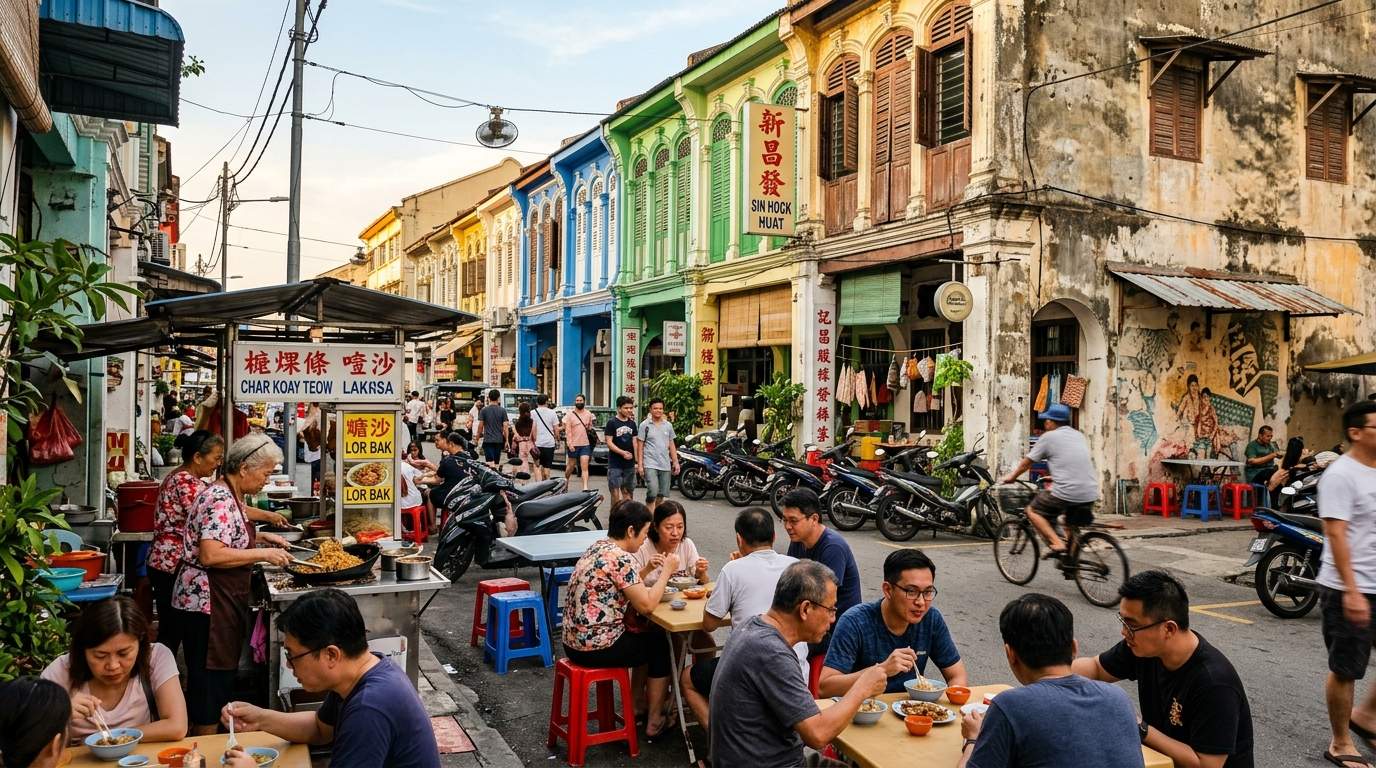
Dining in Penang is where your wallet can either weep or sing. The secret is simple: follow the locals, especially those on scooters, and don't be afraid to venture a block or two off the main thoroughfares. Our daily breakfast ritual involved a kopi-tiam where a plate of nasi lemak, rich with sambal and peanuts, cost RM4. Compare that to the RM15 we saw a tourist pay for a less flavorful rendition at a "café" near our guesthouse. One evening, after a particularly long day, we were craving Char Kway Teow. Instead of the famous spots with their hour-long waits, we found a hawker stall tucked behind a hardware store. "Ini pedas?" I asked the cook, pointing to his wok, trying out my limited Malay. He grinned, "Sedang-sedang, tak terlalu!" (Medium spicy, not too much!), serving up three piping hot plates for a total of RM18. It was smoky, savory, and exactly what we needed. The savings pile up quickly when you avoid the 'hot spots'.
For accommodation, we deliberately chose a guesthouse a few streets back from the main tourist drag, paying RM80 a night for a clean, air-conditioned twin room – significantly less than similar offerings directly on Love Lane. Getting around was primarily by foot or the remarkably efficient Rapid Penang buses. During peak hours, the bus was a lifesaver, cutting through traffic while we relaxed. Mark, after his initial Grab grumbling, even downloaded the bus app and became quite adept at navigating the routes. "Okay, fine," he admitted, "this beats sitting in traffic and paying RM15 for a 10-minute ride."
To truly savor Penang, aim for the shoulder seasons, like late spring or early autumn, to avoid the worst of the heat and crowds. Always carry a reusable water bottle – the humidity demands constant hydration, and refilling stations are often available at guesthouses. And a friendly "Terima kasih" (thank you) goes a long way. Sarah even packed small sachets of rehydration salts, a genius move after a particularly spicy meal. Penang is a symphony of flavors and cultures, but its true magic lies beyond the well-trodden path, in the quiet corners and the generous smiles of its people, all accessible without breaking the bank.
Forget the crowds and inflated prices; Penang rewards those who seek its authentic heart with unforgettable experiences and incredible value.