The first time a local taxi driver on Belitung island refused my money, I thought I’d misheard him. He had just driven my sister and me forty-five minutes from the airport to our homestay, and the meter in his beat-up Daihatsu read 85,000 rupiah.
He pointed at the number and said, “Fifty thousand enough,” with a smile that showed three missing teeth. No meter trick. No “tourist tax.” Just a man named Pak Udin who apparently hated overcharging more than he liked fuel money.
This doesn’t happen in Bali. We learned that three months earlier when a driver in Ubud took the “scenic route” on purpose and charged us double. Never again.
Belitung sits off the east coast of Sumatra, a two-hour flight from Jakarta that cost us 600,000 rupiah round trip (about 38 USD). Booked three weeks in advance. Compare that to flying to Denpasar from almost anywhere, and you’re already ahead by a nice dinner.
The main airport is small. Like “one baggage carousel and a ceiling fan” small. No duty-free shop selling overpriced sunglasses. No touts shoving tour brochures in your face. Just the smell of clove cigarettes and rain.
We stepped outside and Pak Udin was the first driver we saw. The second driver arrived five minutes later, looked at us, and walked away when he realized we already had a ride. No haggling. No yelling. Just a shrug and a cigarette.
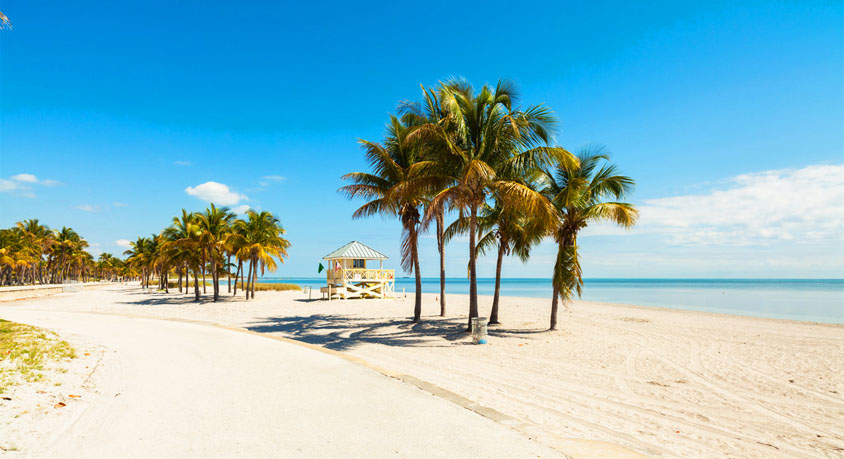
Tanjung Tinggi beach is the reason people come here, and the reason people leave disappointed if they only stay for the photo. Giant granite boulders dot the shoreline like petrified dinosaur eggs. The water is that ridiculous turquoise color that looks photoshopped even in real life.
But here’s the catch. The main entrance charges 20,000 rupiah per person. The parking lot fills up by 10 AM with local families who bring entire living rooms to the sand – coolers, folding chairs, a portable speaker playing dangdut music.
We paid the fee once. I walked the beach for twenty minutes. Then Pak Udin showed us the real Tanjung Tinggi.
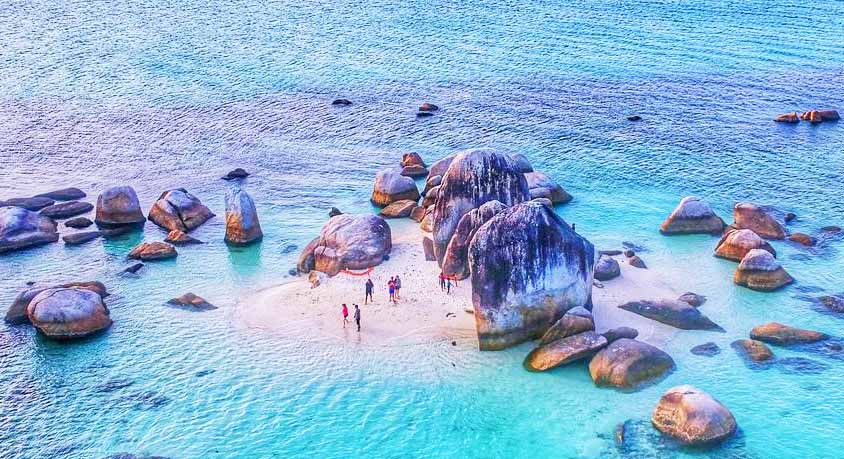
“Follow the rocks to the left,” he said, pointing at a path that wasn’t a path. “Past the third big boulder. No ticket. No people. Just you and the sea urchins.”
We climbed over sharp granite for about two hundred meters. My sister slipped once and cut her palm. I gave her my bandana. She called me a bad travel partner. I called her clumsy. The usual sibling stuff.
The cove on the other side was empty. Completely empty. White sand with a pinkish tint from crushed coral. A single fishing boat pulled up on the shore with no owner in sight. We stayed for three hours and saw exactly two people – a father and son collecting shells who waved and kept walking.
Cost for this private paradise? Zero rupiah. Plus the 20k we “wasted” at the main entrance. I call that a research expense.
For lunch, avoid every restaurant with an English menu. In Tanjung Pandan town (the main city), a place called Rumah Makan Sederhana looks like someone’s garage. Because it is someone’s garage. A family runs it out of their carport.
We ordered nasi goreng belacan (fried rice with shrimp paste) and a plate of gangan (fish soup with turmeric and lemongrass). Two large portions, two iced teas, and a bowl of kerupuk crackers. The bill came to 42,000 rupiah. Two dollars and sixty cents.
The owner’s teenage daughter practiced her English with us. “Where from?” she asked. “Jakarta,” I said, because explaining the US to a girl in a garage seemed exhausting. She said, “Jakarta people are always in a hurry. You eat slowly. Good.”
I didn’t have the heart to tell her I was eating slowly because the shrimp paste was spicy enough to melt my tongue.
The most surreal spot on Belitung is the shipwreck at Pulau Lengkuas. A lighthouse island with a Dutch-era beacon and a wooden fishing boat that ran aground decades ago. Tour boats charge 350k per person for a “sunset package” including snorkel gear and a guide who points at fish.
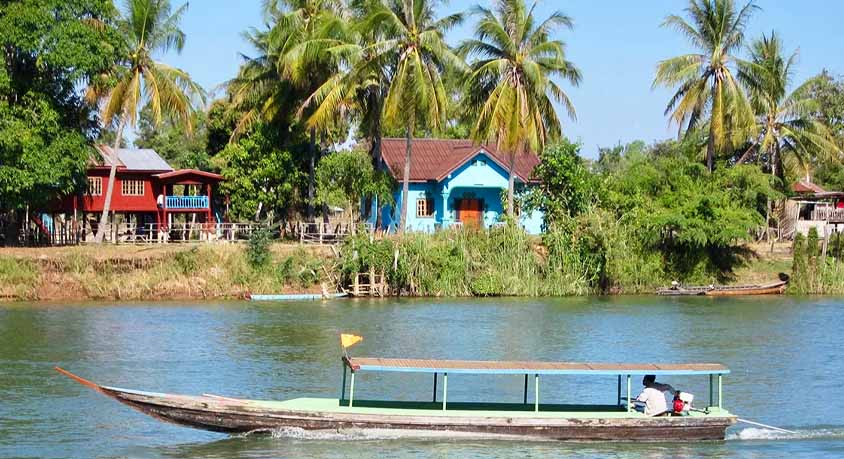
We walked to the public dock in Tanjung Kelayang village at 7 AM. A fisherman named Pak Heri was fixing his engine. We asked if he could take us to the wreck and back. He thought for a moment, then said, “One hundred fifty thousand for a boat. You can share with others if I find it.”
He found three local teenagers going to the same spot. We each paid 37,500 rupiah. That’s less than two dollars and fifty cents. Pak Heri dropped us at the wreck, pointed at the shallow water, and said, “Snorkel no need. Just open my eyes.”
He was right. The wreck sits in waist-deep water at low tide. We walked right up to it. Rusted metal beams, coral growing on the hull, and fish that didn't care about us at all. The teenagers jumped off the bow like it was their local swimming pool.
The lighthouse itself requires a small donation (10k) to climb. The view from the top is a grid of green islands and blue water that looks fake. I took one photo. Then I just stood there while my sister complained about the heat. That’s the thing about unpopular places – you don’t spend your time fighting for angles. You just look.
Season warning: October to April is rainy. We went in late March and gambled. Every afternoon at 2 PM, the sky turned black and dumped rain for exactly one hour. Then the sun came back like nothing happened. Pack a poncho and learn to love wet sneakers.
May to September is the dry season. That’s also when Jakarta families flood Belitung for school holidays. If you want cheap homestays and empty coves, go in March or October. Shoulder season means occasional rain but zero crowds and prices that haven't been inflated by demand.
We stayed at a homestay called Pondok Ibu. Three nights. Two separate beds. A shared bathroom with a hose instead of a toilet seat – the Indonesian way. The lady who ran it, Ibu Siti, made us breakfast every day at 6:30 AM sharp. Pancakes with banana slices and a cup of sweet Nescafe.
Cost per night: 180,000 rupiah (about 11 USD). When we checked out, Ibu Siti asked if we enjoyed her pancakes. My sister said they were the best she’d ever had. Ibu Siti teared up a little. Then she gave us two bags of local white pepper as a gift.
White pepper is Belitung’s main export. A kilo costs 50k at the market. The same kilo in a Bali souvenir shop would be labeled “artisanal” and sold for 250k.
Three days on Belitung. Two people. Total spent on flights, homestay, all meals, all transport (including Pak Udin for two full days), boat trips, and entrance fees. 1,780,000 rupiah per person. One hundred ten US dollars.
The same money in Bali would get you a mediocre hotel room in Kuta for three nights and maybe two dinners if you skipped the cocktails. Belitung gave us empty coves, a fisherman who refused our tip, and a garage meal that tasted like someone’s grandmother actually cooked it.